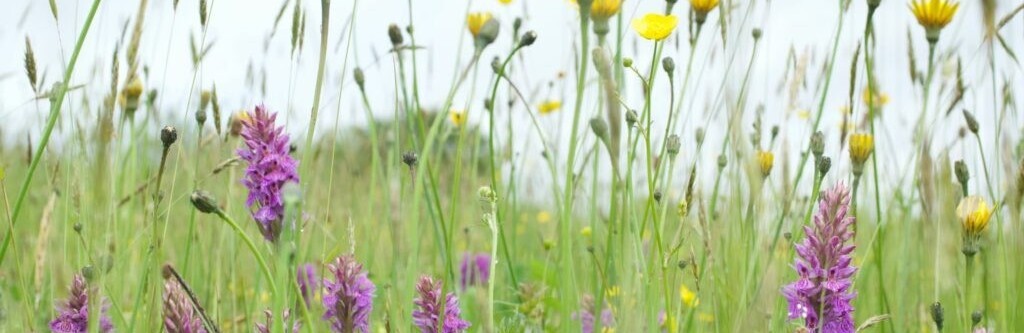

“Imagine trying to travel around the UK without our road and rail network. Or imagine if nine out of every ten miles of road just didn’t exist – life would be impossible! That is the situation faced by our vital pollinators and other bugs." (Buglife)
"No bees, no food. These tiny pollinators are essential to our planet — let’s protect them before it’s too late.” (David Attenborough)"
 |
 |
|
|

This TTK project, developed in collaboration with Habitats & Heritage and Kingston Council, aims to encourage and normalise greener, wilder parks, gardens, roadside verges and green spaces in Kingston and to improve the wildlife connectivity between them, by sharing and signposting relevant information and highlighting good practice.
Though Kingston is often thought of as a leafy suburb, with its gardens, parks, green spaces, grass verges and street trees... many of the larger green oases are outside or on the very edge of our borough and/or separated by miles of denatured space (see a map of Kingston’s green spaces here), a suburban desert of buildings, paving, over-mown grass, neat hedges, pollarded trees and manicured gardens... all contributing to the depletion of nature in our neighbourhoods and beyond.
Do please revisit this page occasionally for updates and useful new links.
Why go wild?
Wilding, trees and naturalising green spaces can help our wellbeing and mitigate the biodiversity and climate crises – find out here about the benefits to wildlife and people of wilding, biodiversity corridors, hedges and trees…
Find resources to help Kingston go wild somewhere near you or on this website:
Our resources include: “Please water me” tree/planter tags; a leaflet on wild-life-friendly gardening for people wanting to make a start on wilding; window “clings” for people with wild-life-friendly gardens... Collect the ones useful to you at monthly Kingston Green Drinks (see TTK Events), Save the World Club at The Circulatory, The Hive, Kingston Environment Centre, and from your local library. Or you could try printing your own including signage recognising wilder gardens and public green spaces - parks, roadside verges, green hubs, woodlands, river-banks... to encourage others to join in.
See this page for availability.
How to go wild, what you can do do, and where
How you can help to make Kingston’s green spaces wilder and better connected:
- In your own garden and beyond
- In public green spaces – don’t forget that many of the public spaces we’d like to be wilder belong to the Council and you’d need permission to make any improvements. If you spot a nice wild patch on a grass verge tell your local councillors and the Council Green Spaces Team that you appreciate it (otherwise they only get complaints), and If you'd like to adopt and (re-)wild a grass verge or a tree-pit or a Council-owned flower-bed or donate a tree please email for permission and guidance from the Council Green Spaces Team.
- Use your contacts (local schools, businesses, colleges, friends of parks groups... ) to help connect green spaces.
- Look after street trees, and water them during droughts - see advice from the Woodland Trust and from Kingston Council - and hang a Kingston WildWays tag on thirsty trees.
- In your neighbourhood - could your road or neighbourhood create a Community Nature Reserve? Find out more about Community Nature Reserves from Avon Wildlife Trust. Or could your garden show your neighbours that a wild-lief-friendly garden doesn't have to be an untidy mess of brambles and nettles?
- Volunteer - in a community garden or a local conservation and biodiversity project.
- Help TTK to plan and make progress on the next steps of our wilding project.
- Campaign and share information: get your neighbours and your local park's Friends group on board, and seek support from your ward councillors. Download and display one of our posters (coming soon).
- Growing wildlife connectivity - if you’d like us to recognise a wild green space large or small, please contact us.
- Read more about wildlife corridors in urban areas here, and about an impressive wildlife bridge connecting Surrey heathland across the A3 here.
Nature on your doorstep
What's growing? Plantlife recommends 3 plant identifying apps for your phone.
What's that sound? Identify the birds you see or hear with Merlin Bird ID.
History and updates
While this project is relatively new for TTK, awareness of the interconnectedness of the climate and nature crises has been growing for a while, as has public understanding of the benefits of nature and green spaces. Most recent updates are at the top of this list - and please see TTK news section for current news.
Updates, July 2026: we have used some of our funding to print resources to give away - tree tags, window clings, and Habitats & Heritage's flier on wildlife friendly gardening. We now have a working group, a logo/banner-header, a group email address, and have introduced this wilding project and given updates and previews of our new resources to Kingston Biodiversity Network's receptive audience - you can see the notes for the July 2026 presentation here.
Greening Kingston next phase – Open Letter #2, June 2026, updated re-elected councillors on the importance of connectivity for our wildlife and put newly elected councillors in the picture. The first recipients of our Open Letter were local councillors on June 6th, the first day of Great Big Green Week, followed during the week by other stakeholders, and then publication and publicity here on our website and in our newsletter.
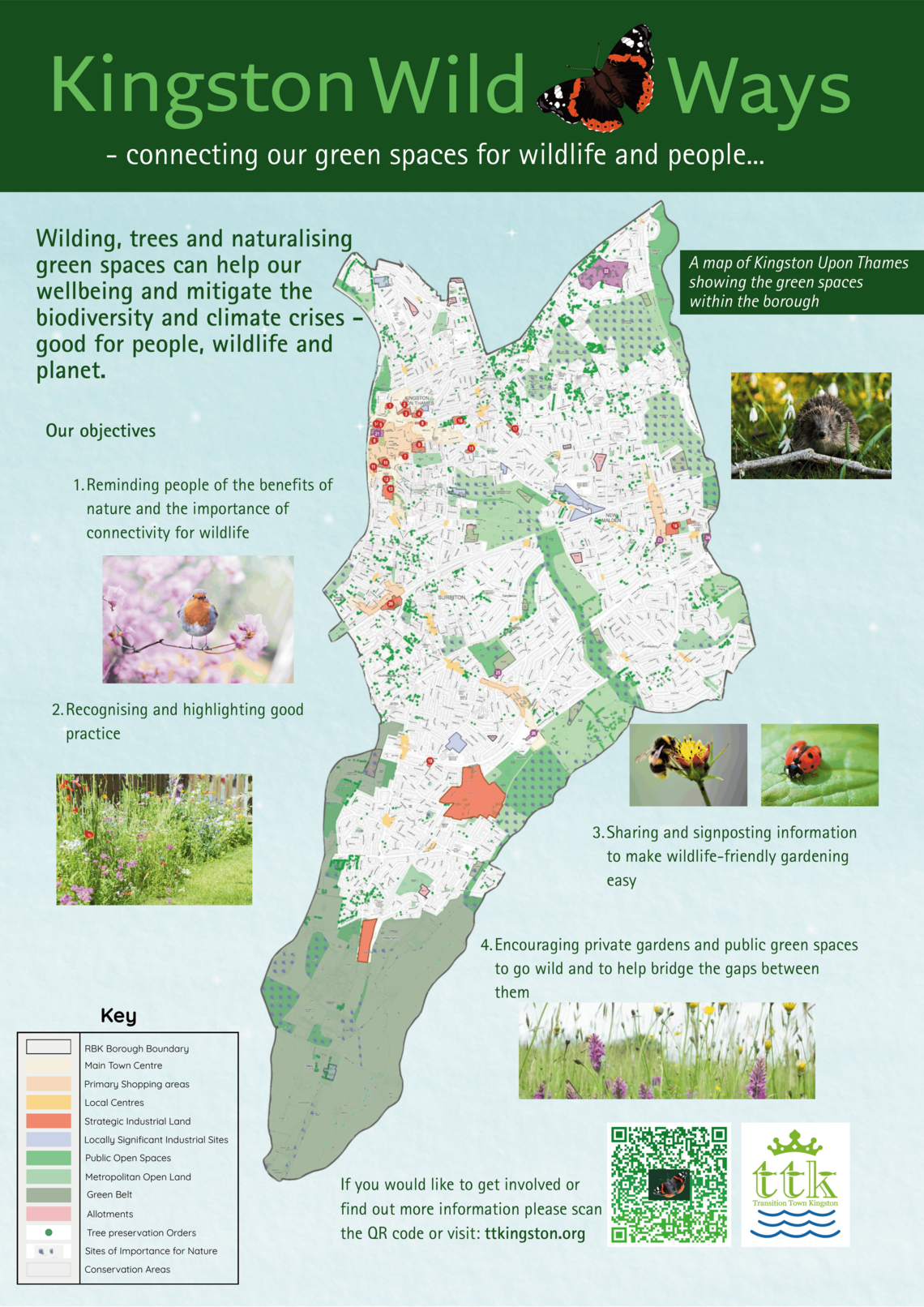
"Stepping Out: an Environmentalist’s Journey across Kingston and Beyond": in 2025 Mac Downes took part in "Kingston Unwritten", a community research project, funded by the National Heritage Lottery Fund, which Included many local environmental projects. As a legacy Mac created a free exhibition in Tolworth Library, which opened in May 2026 and which included this wilding project (poster on the right).
Greening Kingston – an Open Letter, July 2025
"Living Landscapes - making space for nature in Kingston"- the report on this jointly hosted 2012 Transition Town Kingston and Kingston Environment Centre panel discussion